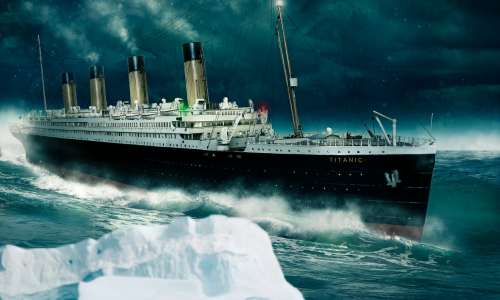
R.M.S Titanic
The R.M.S Titanic of 1912 was the first luxury British ocean liner of its kind. Celebrated for its “unsinkable” reputation, the ship’s collision with an iceberg 350 miles from the northern coast of Canada defied expectations. The wreckage of the Titanic is recognized as one of the most devastating travesties motivating admiralty law in relation to maritime shipping and safety development. Adoption of the first
International Convention for the Safety of Life at Sea (SOLAS) was a major result of the sinking of the Titanic, as was the International Maritime Organization (IMO) 1 (NOAA, 2018). The aftermath of the Titanic disaster ushered a myriad of important maritime regulations that should have been implemented long before the luxury liner set sail.
These regulations encompass safety measures such as ensuring adequate lifeboats and life jackets for all passengers prior to departure, mandating a well-trained crew to effectively assess situations, and the Radio Act of 1912 2 (The Log, 2022).
Other significant actions that were enacted in the consequence of the Titanic were the International Ice Patrol and the Jones Act 3 of 1920. The Jones Act, by ensuring better working conditions in the court of law and safeguarding rightful compensation for injuries at sea, has brought about a vast transformation to maritime regulations (The Log, 2022). The legal framework of this Act continues to prove effective in its ongoing process of amendments. The International Ice Patrol 4 (IIP), established in 1914, has proved highly effective in warning mariners from over a dozen countries about hazardous icebergs. Since its induction, the IIP has tracked over a thousand icebergs, resulting in zero fatalities due to their exceptional surveillance (Mental Floss, 2022).
Beyond the legal ramifications of the calamity, several alterations were implemented to the standard construction of larger vessels like the Titanic. Considering this, The White Star Line, owner and operator of the Titanic, modified designs of sister ships, RMS Olympic and RMS Britannic. The changes elected that the double bottoms of the ship were extended above the waterline, resulting in doubled hulls securing watertight spaces (Mental Floss, 2022). In essence, the basic standards were adjusted to enhance safety in the case of a collision, as were the legislation, IIP, and a multitude of initiatives revolving the importance of maritime safety.