Diasporic Mapping Initiative
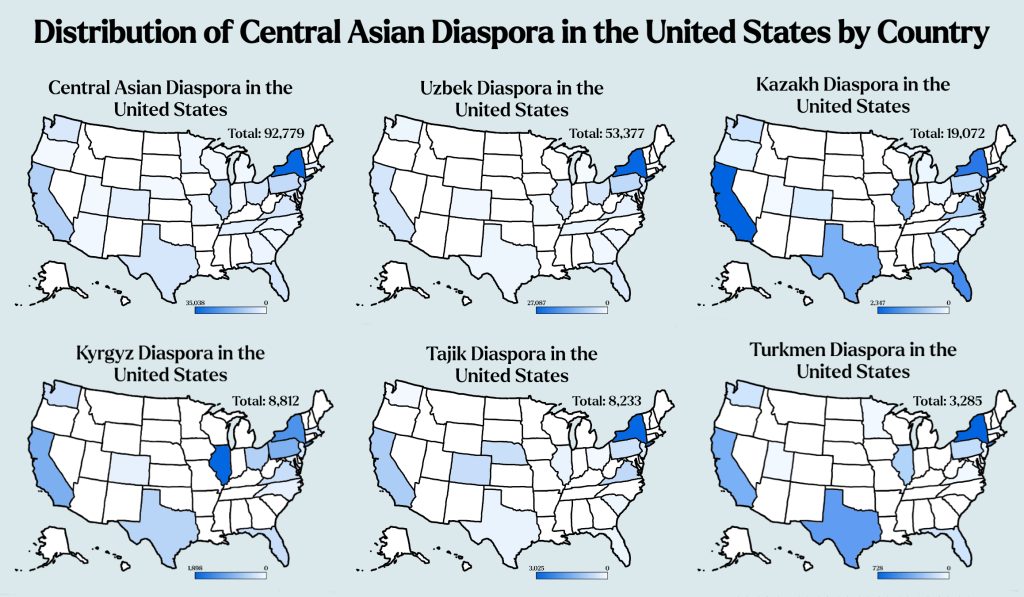
The Diasporic Mapping Initiative, launched by Kasch Marquardt and advised by Dr. Colette Mazzucelli, will take shape in three stages. First, with census data, stylistic maps will be made and used to determine general areas in which Diasporic Communities settle. Next, interviews will be conducted with community leaders of various immigrant communities and case studies will be made and publicized to share the findings from each. Finally, the conglomerated information gathered will be displayed on a master GIS map, highlighting the immigrant communities of America and their needs. The initial cohort of maps will feature immigrant communities from Mongolia, Turkmenistan, and Kazakhstan.
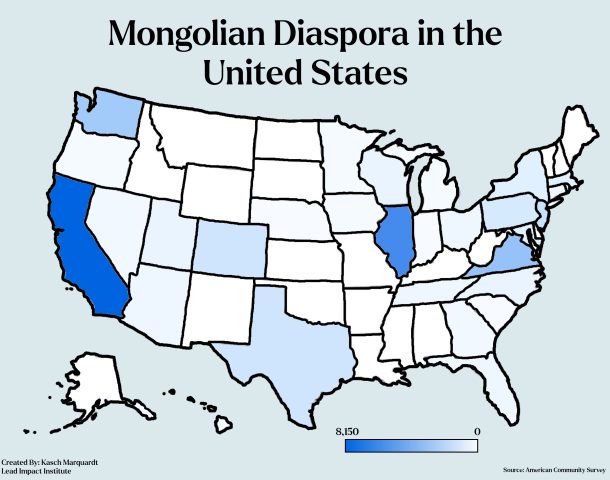
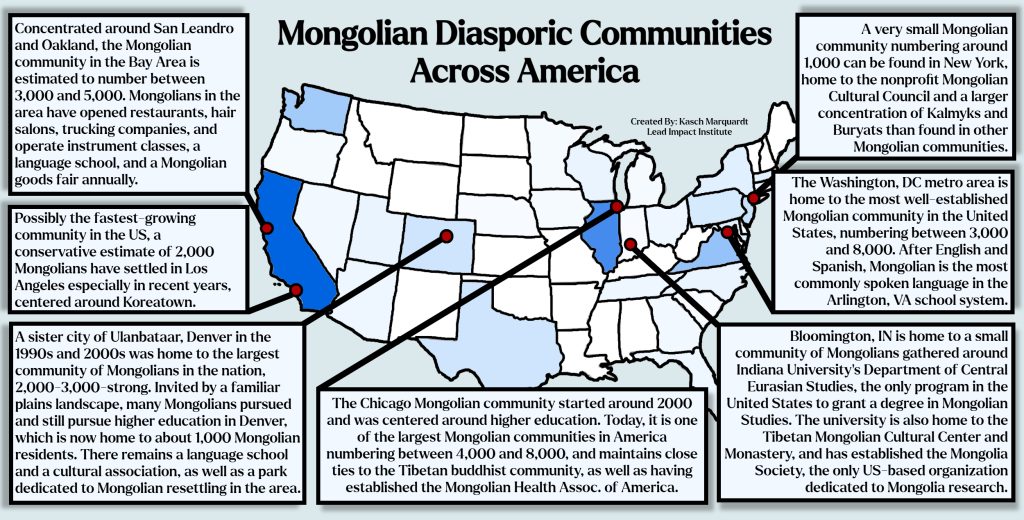
Inspired by the detail of the Language Map of New York and scope of the National Geographic Racial Mapping Project, the goal of LEAD IMPACT 501(c)(3)’s Diasporic Mapping Project is to create a comprehensive resource mapping the rare and vulnerable ethnic communities across the United States. From this mapped data, we aim to further analyze migration patterns and factors that influence them, as well as begin to understand the newfound cultural significance of the locations certain communities congregate around. The American Community Survey (ACS) can be used to pinpoint larger and more integrated ethnic communities, but further research will be needed to gain insight into more specific subgroups and communities.
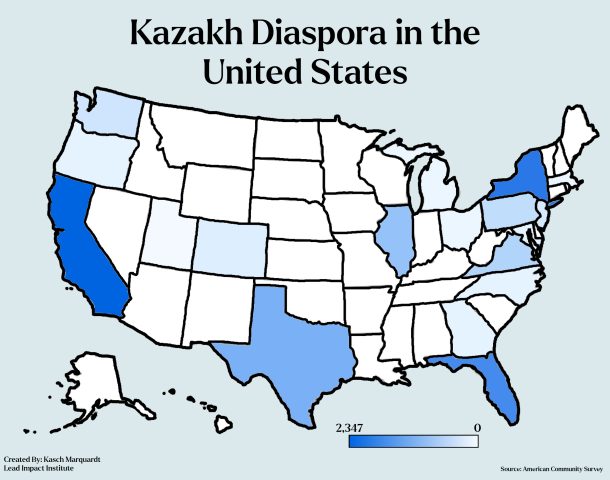
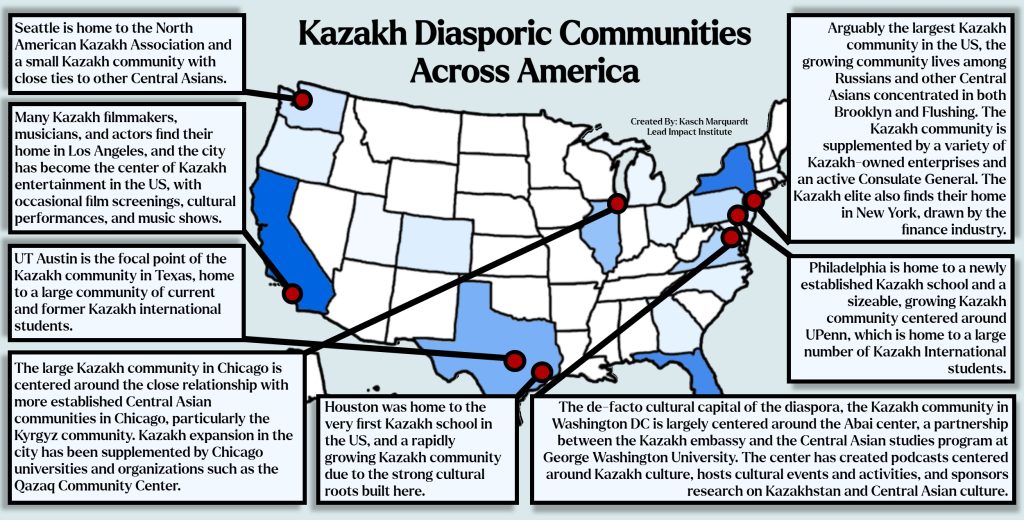
The ultimate goal of this project is to give visibility to the many marginalized and underrepresented immigrant communities in America. Throughout the mapping process, we plan to reach out to community leaders of certain groups and feature them as case studies, examining the challenges these groups have had in their immigration to America and/or in their current situation in their diasporic communities. Video interviews and written articles will be used to display these communities’ situations and analyze ways which NGOs and governmental organizations can help them. As these interviews are being completed, we will be updating the map based on more detailed information these community members can offer us.